Catching up

When I decided to take over the Environment Ministry I imagined that the major task in my sector would be the absorption of EU funds for 2008-2013. I quickly changed my mind after a closer look at the vast range of issues the ministry has to deal with. I realized, that the most urgent task was to bring Poland’s EU membership closer to public awareness. In Poland environment protection is traditionally viewed as a sphere somewhat removed from the mainstream of social and economic life. In the EU, however, the approach is quite different. The EU countries are switching to knowledge-based economy based on full recognition of all environmental norms. The European Treaty says the EU is to pursue sustainable development, and the EU members treat this clause seriously. The Polish Constitution contains a similar clause, but for some reason it has never played a major role in politics. Therefore, in the years to come we will have to base Poland’s development on three pillars: economy, society and environment – with equal attention paid to the environmental pillar as to the other two.
Today we have reached the point where, unless we pursue this path, environment protection could even become a barrier to growth. That is, if we continue our to-date kind of growth, often achieved at the cost of environmental devastation. Therefore, we must allow sustainable development philosophy to guide our decisions in future, not only in environmental matters. And this would be my first major statement as Environment Minister.
Failure to change our thinking has already resulted in trouble at home and tension in our relations with the European Commission. As an example let me mention the January 1, 2008 Directive on reducing emissions of sulphur dioxide and nitrogen oxides in large combustion plants. This Directive was passed in 2001, so there was really enough time to prepare for it – but many of our companies just ignored it, and now their situation is really dramatic.
Another example is Natura 2000. Discussions on the number of Natura 2000 preserve areas carried on for years, with a so-called “shadow list” of areas set against a government list, and the whole matter hasn’t yet been brought to an end. I would like to close the full list of Natura 2000 areas by the middle of this year. At the moment we are in the course of cataloguing the preserves, the next stage will involve management and planning, and then we hope to obtain an instrument that will tell us what kind of investment may be undertaken in Natura 2000 areas, and how to adequately compensate for damage due to such interference on Natura 2000 terrain. We are quite behind in this work so we must really get on with it.
A good example of how much we have to catch up on is the much-publicized Rospuda Valley conflict, which has even brought Poland before the European Court of Justice. I admit that I had not realized how valuable this valley is before reading a report by the State Council for Nature Conservation. There are about 10,000 moors in Poland, but only one like Rospuda, a post-glacial relic fuelled by underground waters. On the other side is the dramatic situation in Augustów, whose people demand more safety. The crucial factor here is time. In order to win some, the Infrastructure Minister and I decided to call a round-table meeting with representatives of NGOs, local government, constructors and experts to try and find a way out of this to please all involved. I believe this can be done.
There are other important areas in which we are lagging behind. One involves the recently much-discussed cuts in carbon dioxide emissions, which brought Poland’s quota down from 284 million to 208.5 million tonnes. The quotas were to be allotted by September 30, but they weren’t – and maybe this wasn’t so bad, because the dominating idea was “equal cuts for all”. I don’t agree with this approach because there are branches of industry in Poland which are modern, use latest technology and possess all necessary certification, and are simply unable to cut emissions more without downsizing production. This, however, would be absurd, because if we were to cut down, say, cement production in our highly modern plants, we would be forced to buy the cement from countries whose production technology is inferior to ours, which would again raise carbon dioxide emissions. This is no solution.
Quota cuts are all right for branches with the technical means to lower them. One such sector is the power industry. We still make insufficient use of gas-steam power units, which would make our power system more flexible. We also fail to see the opportunities offered by renewable energy, for instance wind plants, in considerably lowering emission levels. There is no “joint implementation”, no moves to apply Kyoto mechanisms or to purchase failing quotas. Initial estimates show that if carbon dioxide emissions quotas for the power industry were reduced by slightly more than 27%, then electricity prices would go up by 1-2%. This is really not all that dramatic.
I believe that if we get down to work we’ll be able to present the European Commission with our quota distribution list by the end of February. Of course the situation may still change after the Court of Justice verdict on the charges we brought against our quota. Another 30 million tonnes would certainly take a heavy load off our industry’s shoulders.
Of course there are some matters we’ll have to “go to Canossa” with – in other words, apologize to the European Commission for not keeping deadlines, assure them that we have an earnest repair programme, and request a stay of sanctions. One such matter concerns the requirement to recycle exhausted electronic and electric equipment at a per-capita annual rate of at least 4 kilogrammes. Our result for 2007 is a mere 0.2 kilogrammes, far below the required level. This is the effect of not only failing legislation, but also leaky statistics, as the figures cover only gear deposited in special recycling points. Equipment left with a regular scrap collection point is not recorded. The truth is, however, that most old electronic and electric gear is deposited in regular scrap collection points. New legislation will hopefully help mend this situation – although I can’t say how effectively. Some say that nothing can be done as there just isn’t enough used electronic and electric gear in Poland to meet the required limits.
The above is only an example illustrating our biggest weakness – waste disposal. We pledged not to deposit more than 76% of our municipal waste on landfill sites by the end of 2007, and the actual level is still 92-96%. Similarly, we are not keeping to our obligations regarding packaging and large waste. We also promised that by 2010 we would utilize and not discard up to 25% of our bio-degradable waste. In reality, however, we utilize a mere 400,000 tonnes instead of the prescribed 1,100,000. Moreover, these are not directives that have been imposed on us but obligations we took upon ourselves in our EU Accession Treaty. At the moment we are working intensively on the legislation and economic instruments needed to speed matters up in these areas.
The GMO issue is certainly something that has not yet been decided within the EU and where we will have to fight to hold our ground. I agree with my predecessor that this is a huge, unprecedented and dangerous experiment whose effects are hard to predict. For the first time in human history “living pollution” is to be introduced into the environment to breed, mutate and spread. In my opinion the word here should be caution. Genetic modification might be understandable in times of famine – but far from starving, Europe today has a surplus on food. And if so, why take such risks? Poland is on the side of those EU countries who staunchly oppose the idea, like France and Austria.
To me the easier matters are those that can be negotiated at home, although some of these go far beyond our country. A good example is the idea to make the entire Białowieska Forest into a national park. Białowieska Forest is the last stretch of original lowland forest in Europe, and NGOs have gathered more than 100,000 signatures under a petition in the matter. A special team in the President’s Office has already prepared the necessary legislation. In the near future we will take steps to raise protective measures in Białowieska Forest, but in such a way as not to disturb local communities.
This is a very initial and incomplete list of what the Environment Ministry is currently most busy with. To conclude I would like to repeat what I said at the outset – one of the most crucial tasks will be the absorption of EU funding.
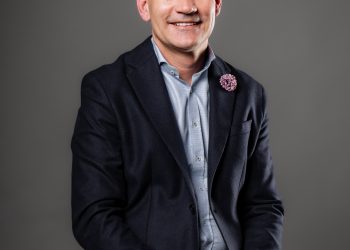
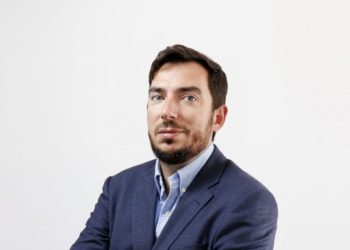
Professor Maciej Nowicki, D. Sc.,
1996 laureate of Europe’s most important environmental protection award,
Der Deutsche Umweltpreis, for his work as scientist,
politician and environmental activist. Professor Nowicki used the prize money (DM 350,000) to create a foundation supporting leading Polish environmental science graduates.
(Address at a briefing opening Professor Nowicki’s office
as Environment Minister – December, 2007)