The toils of fine arts

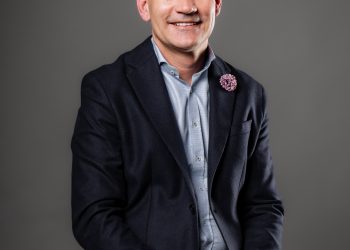
ry Piwocki, Rector of the Academy of Fine Arts (ASP) in Warsaw. He talks to Maciek Proliński.
Q: Addressing your students at the start of the 2007-2008 academic year you pondered why they had decided to sacrifice their youth in favour of arts studies. You lifted up their spirits saying that such “baptism into adulthood through the arts is worth the toil”.
A: It is worth the toil. Having chosen the arts as subject of studies, our students opted for a career that will eventually give them a lot of excitement and satisfaction. Our Academy runs six faculties offering studies in painting, sculpture, graphic arts, art conservation, interior decoration and industrial design. The studies are not confined to teaching practical skills and theory. We educate students to become creative and socially cultured as well as imbued with the sense of belonging to the intellectual elite. We bring them up as people well versed in contemporary world affairs, forward looking yet perceiving the importance of the past as well. That is crucial for anyone involved in the arts.
An artist must know the principles that function on the art market now open to the world, and first of all to Europe. In trading – let’s not be ashamed of that word – on that market and in particular on the international art market, nobody can do without a good art dealer nowadays. I think that on the one hand Polish art is beginning to get out of the fences of provincialism while on the other demand for designers and art conservators is growing.
Can all the subjects taught at the Academy be called art? This is a question that has been preoccupying us for years. However, art is one. This shows in the accomplishments of many prominent artists such as Stanisław Wyspiański or Miroslav Tichy. Both were versatile artists producing paintings, stained glass and cabinets, designing graphic art publications and interior decorations. A painting is a work of art to look at, a chair is one to sit on, but to render them works of art somebody must bring them out from a state of non-existence and give them a material form. Probably most of our students will not go in for pure arts. They will be working primarily for advertising and publishing companies, for industry and crafts as well as promoting Poland and its products. In the West, governments endorse the development of mass industrial design projects. That is not the case in Poland. Yet graduates of art schools where designing art is taught have a role to play in enhancing the competitiveness of Polish products.
I am sure of one thing: the toil of studying at the ASP will result in educating people with an education and qualifications that would place them among the elite of society, such as is the teaching staff at the Academy of Fine Arts in Warsaw. The staff includes painters Leon Tarasewicz and Jarosław Modzelewski, sculptors Adam Myjak and Janusz Pastwa, designers Jerzy Porębski and Wojciech Wybieralski, exhibition designer Henryka Gałązka, architect Jerzy Bogusławski, stage designer Paweł Dobrzycki, functional graphic artists Maciej Buszewicz, Lech Majewski, Mieczysław Wasilewski and Stanisław Wieczorek, workshop graphic artist Andrzej Węcławski, art conservator Andrzej Kos as well as art historians Anna Lewicka and Wojciech Włodarczyk. Our most renowned graduates include Paweł Althamer, Zofia Kulik and Katarzyna Kozyra. Their works bear an impact on the shape of arts in Poland and abroad. That obliges and impels the Academy to monitor the school’s teaching level, a task, by the way, which is not made easy due to the constant changes of regulations. Of course, all schools of art are elite institutions. The basics of the arts are taught to students in small groups rather than in mass auditoria since in a school of art only that method serves best to exchange ideas, views, opinions and criticism in that particular field of education.
Q: How do you assess the Polish art market? Do people in Poland buy works of art?
A: The Polish market is still young and unstable, and its potential is naturally tied up with the country’s economic development. Ever more people become rich and begin to feel the need to buy works of art. For the time being, the market is still developing and it will take probably years for a wide circle of collectors, experts and art enthusiasts to emerge. Important entities operating on this market consist of foreign companies which are building up their own collections. Some galleries are better than others. There are many places in Warsaw, Kraków and Silesia functioning very well, promoting the arts and capable of drawing interest of new clients in their offer. For after all, a work of art is not just a thing beautiful; it is also a thing to invest capital in. Auctions and art fairs are also held here on site so I can see how much this market has changed in recent years. I know people who can easily afford spending quite a hefty sum of money for a work of art.
Q: Would you elaborate on your Academy’s collaboration with sponsors of the arts?
A: The number of our sponsors has been rising all the time. When the Academy’s diplomas and awards were presented about a month ago, prizes amounting to almost PLN100,000 were given out to our students by companies sponsoring the Academy. Our sponsors offer scholarships, organize exhibitions of works by our students and graduates. It is worth noting that many students’ designs have been bought and implemented by industry. The new design of the Municipal Commuter Railway Line cars developed by our student at the Design Faculty is one example. Our students co-operate with companies, leave for sponsored study courses abroad, sign work contracts before completing their studies. During the year, several hundred dealings of that sort are on with various firms, medium-sized companies as well as big corporations, private and state-owned businesses. Many interesting, creative undertakings, projects and meetings have ensued as a result. These joint undertakings serve students, the promotion of companies, the city and the economy. We have still not worked out a formula of informing the society about that wide array of cooperation we are involved in and of giving media publicity to many really big and meaningful accomplishments.
Q: The Academy of Fine Arts in Warsaw is currently facing the threat of eviction from its seat occupied for many long years in a historical palace in the city centre...
A: The Academy has had its seat in the 18th-century Czapski family palace since 1947. When it received the premises, 70% of the building was destroyed. It was the government that rebuilt it. The decision of the Ministry of Construction waving earlier court decisions put the school in a highly difficult situation. The prospect of evicting one of the largest and oldest schools of art in Poland must ring alarm bells. If we, or the State Treasury, lose the case in court, such development could become a worrying signal for present users of historical buildings in the Polish capital centre. That might apply to the seat of the Ministry of Culture, the Governor’s Palace occupied by the head of state, buildings used by Warsaw University and other schools of higher learning. Admittedly, the whole problem is very complex and the consequence of the tangled history of the city and Poland. One may ponder why no effort was made during the past twenty years since Poland regained freedom after Communist rule to lay down laws defining the terms of returning private properties? Admittedly, society had borne immense costs of reconstructing ruined buildings, yet on the other hand compensation is clearly due for property seized by the state at the time. However, the loss of this historically meaningful site for the benefit of nowadays-hard-to-establish new owners would be catastrophic. The site of this Academy was the home of Chopin and Norwid; it was here that the May 3rd Constitution was drafted and that the Office for Help to the Hungarians in 1956 had its seat; it was here that students were fighting against ZOMO troops in March 1968. It was here that the artistic elite of post-war Poland were educated and teaching.
The removal of the Academy of Fine Arts from the Krakowskie Przedmieście Street would have disastrous consequences for the school, the image of Warsaw, the academic community and culture. We want to stay here and are looking for help. We think that the issue is not just only our problem.