|
RSS

We are building a university of the future together:

2008-06-03
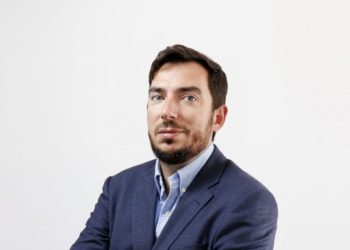
Warsaw University of Life Sciences (SGGW) is among the best “universities of life” today. There are 27 study disciplines at the SGGW, with more than 70 specialist fields, giving students very specialised and individual fields of study. It is a modern university open to change, valued in Poland and abroad. Maciek Proliński speaks with Prof. Dr. Hab. Aljzy Szymański, candidate for Vice –Chancellor of SGGW in Warsaw.
REKLAMA

Why is it worth studying at the University of Life Sciences (SGGW)?
SGGW is the oldest agricultural academic school in Poland that dates back to 1816. Until recently it was considered to be “only agricultural” in nature. Currently, we promote the university as a life and environmental institution, a modern university with all disciplines, which embrace people and their environment: water, soil, air, plants and animals. We are proud that today we are among the best such “universities of life”.
The SGGW university specialises in various fields of natural sciences many of which continue to evolve, including such study fields as agriculture, forestry, horticulture and veterinary sciences. Apart from the traditional areas of study and research, such disciplines associated with food technology and human nutrition, environment protection, landscape planning, building, landscape architecture, sociology, economics and Information Technology are also included in the SGGW curriculum. There are currently 27 study disciplines offered at SGGW and more than 70 specialist areas, giving students very specialised and individual fields of study. Valued in Poland and abroad it is a modern university open to change. It takes years to establish such a good university, and its quality is determined by such factors as its high quality of education, strong teams of researchers cooperating in scientific work, academic and research staff dedicated to the university and an appropriate teaching and research infrastructure. During our many conversations, Vice Chancellor Prof. Dr. Hab. Tomasz Borecki had often said “love people and through work realize your dreams”. And we had and continue to have similar dreams, that is, for the university to reach an academic and scientific level, structural organisation and technical infrastructure comparable to that of the best European universities. I would like to realize this objective set many years ago during the next term of office, as vice chancellor of SGGW, in a worthy manner taking over from Prof. Borecki’s distinguished service.

Is our higher education system competitive on the European market? How does the SGGW compare, and also how does it present in the context of the university’s strategy for development?
Within the new economic and political reality, the SGGW provides Polish youth with excellent conditions for personal development. Currently there are 25,000 Polish students, as well as students from Europe and other parts of the world. The academic community aspires to ensuring that the university will be classed among the best in Europe and throughout the world. Activities of a modern university are focused on three mutually interwoven objectives: scientific research, teaching and economic cooperation. This comes from the university’s mission within a society, which has the responsibility to educate a highly qualified personnel for the economy and to create research teams and develop scientific knowledge amidst international cooperation.

We currently see changes in university systems in Europe, and the final objective is to create by 2010 a European Zone of Higher Education, resulting from an agreement in regard to certain general organisational education principles. This initiative is an attempt to develop a joint European position in response to the problems experienced in most countries, such as for example to create conditions conducive to the mobility of citizens, or to adapt the education system to the needs of the employment market. The aim of this initiative is to develop principles of mutual cooperation, taking into account the autonomy of each nation and university. Bringing this process about in our university requires further improvement and introduction of education quality systems at all faculties. In the nearest future we want to concentrate on supporting the basic organisational units in their activities to improve the quality of teaching and to increase the transparency of the education system as well as to develop the system of quality assessment of organisational units in regard to the quality of student education and the quality of graduate education in accordance with accepted standards of the European Zone of Higher Education. No doubt the quality and competitiveness of education is influenced by the financial position and the level of internationalisation of education…We want to introduce in the near future the systematic development of the university’s IT infrastructure, maintain the current speed of modernisation of laboratories and lecture theatres, speed up the pace of building research and innovation centres (including the Water Centre, Food and Nutrition Centre, Biological Research Centre and Renewable Energy Centre) using financial resources from the EU structural funds.

You already mentioned the university’s cooperation regarding economic practices which has a bearing on innovation. How is SGGW involved in this cooperation?
It is our ambition to develop new methods and new technologies in our laboratories which will guarantee better products ands safer food, guaranteeing greater crop yields, improvement in people’s health and the good condition of animals. Many SGGW academics are working in the area of balanced economic development, that will ensure the best condition for the natural environment.
The economic cooperation is also conducted through the activities of field and experimental farms and experimental plants. In this area in the nearest future we plan to modernise the experimental fishery station at the Faculty of Animal Science in Chylice within the structural fund regional program, and to modernise the agricultural plant in Kociszew meeting the need to introduce agro-tourism in regional country areas. I should add that in 2006 our university set up a special unit, the SGGW Centre for the Organisation of Research and Training. The aim of the Centre is to integrate the SGGW scientific and research circles in the process of providing professional research services, consulting and training aimed at strengthening the cooperation between the research and development sector and the economy. The Centre’s priorities include the identification of needs in the areas of research and training for institutions and those bodies associated with the development of the country side, agriculture and food management, broadening SGGW research and training services, increasing involvement of university staff in research and projects co-financed from EU structural funds, in particular innovative activities, coordination of SGGW activities in regard to postgraduate studies, particularly Master of Business Administration (MBA). This is done through the establishment and maintenance of networks with Polish institutions and other bodies which may potentially commission the university’s research and training services, cooperation with institutions and organisations involved in the agricultural and food sector, cooperation with international research and training bodies, mainly in the EU and USA, and finally, through providing up to date information about the potential activities of interested SGGW personnel, students and graduates.

Thank you for the interview.
Maciek Proliński

Prof. Dr. Hab.Alojzy Szymański, SGGW graduate. Received the title of professor of technical sciences in 2005. He has worked for many years at the SGGW Faculty of Engineering and Environmental Science. He was Deputy Dean of Didactics for 6 years, during 1999-2002 he was Dean of that Department. Since 2002 he is Deputy Vice Chancellor responsible for SGGW development. His scientific interests are mainly in the field of geotechnics, foundation engineering of structures and hydraulic constructions.

Print articlePDF
Sign up to comment on articles or receive newsletter
E-mail
Password
Register
Copyrights © Polish Market 2007
Powered by G-point.biz